The Market List
Plan first. Shop second.
Know what you need. Know what you can spend. Know before you shop.
Every kitchen has had some version of the same piece of paper. It sits under a magnet, in the back pocket of a notebook, or these days more often in a phone, getting added to in fragments. Nobody has ever called it glamorous. It just works, quietly, the way a good tool does.
But the list was never really the point. By the time someone is standing in the aisle, the actual thinking already happened — what to cook, what's already in the fridge, what Sunday dinner is going to look like. The store is just where the plan gets carried out.
That's the idea behind the Market List, which now lives in the Dining Room.
What it is
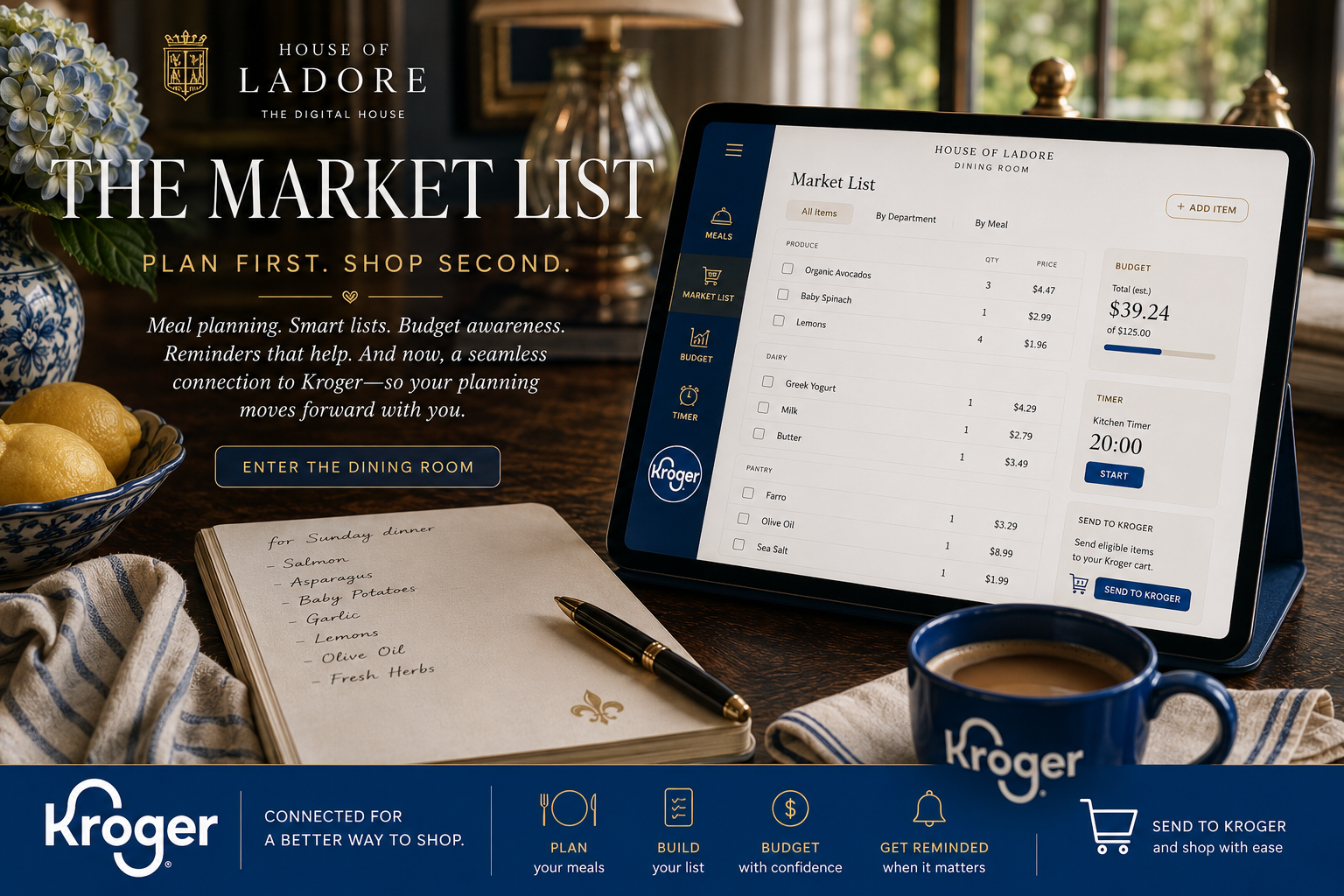
The Market List is where the planning happens, before the shopping does. It's a place to hold what a household needs — organized, priced, ready — so the trip to the store is closer to the last step than the first.
It's built specifically for the kind of thinking grocery shopping asks for: what's for dinner this week, what's running low, what it's all going to cost, and what keeps slipping past you.
Starting with the meal
The Dining Room asks the question earlier — what are we actually eating this week? Once that's settled, the ingredients tend to follow on their own, and building the list becomes less of a guessing game.
A list that starts from a plan is usually shorter and a lot less likely to send you back to the store two days later for the one thing you forgot.
Building the list
Once the meals are settled, the Market List becomes the place everything gets collected — groceries, pantry staples, and the household items that only get remembered the moment you run out of them. It can be sorted by department or by meal, keeping the week's planning in one place.
Seeing the number before you get there
The Market List keeps a running total as things get added. The point is simple: answer one important question earlier than it usually gets answered — what is this actually going to cost?
Instead of finding out at the register, the number shows up while there's still room to change something — swap an item, cut something, or decide that this is exactly what the week calls for.
A reminder, when there's something to come back to
Sometimes there's just something that needs revisiting later. The Dining Room has a reminder built in for that. Set it, and while the Market List is open, the House lets you know with a chime and an on-screen note.
The reason it was built this way
Groceries have become a serious part of the household conversation. Between housing, utilities, transportation, kids, and everything else that comes with running a home, an ordinary trip to the store can feel different than it used to.
That was on our minds when this was built. Not to make a nicer-looking grocery list, but to give people another way to plan before they spend.
The Market List can't change what things cost. What it can do is show you the number sooner. When every dollar is doing work, knowing before you go matters just as much as knowing what to make for dinner.
Where Kroger comes in
Once the meals are planned, the list is built, and the choices have been made, the Kroger feature helps carry that plan forward.
With the guest's permission, eligible items on the Market List can move into her Kroger shopping experience. Nothing is purchased on her behalf. She still reviews products, quantities, availability, and pricing on the Kroger side and makes the final decision herself.
From there, delivery, pickup, or shopping in store remains entirely her choice. The Market List does the planning. Kroger is where the shopping happens.
Why it adds up to more than the parts
A household runs on dozens of small decisions. The Market List brings more of those decisions into one place: meals, a list, a running total, a reminder, and a way to carry eligible items forward to Kroger. Fewer scattered notes. Fewer surprises at checkout.
Why the Dining Room
The Dining Room was never meant to be a page with tools bolted onto it. It's a room — where meals happen, conversation happens, and the ordinary logistics of running a household happen too. The Market List isn't separate from that. It's part of what a dining room does.
Where this could go
Right now, the Market List helps plan, build, price, and shop with a bit more intention. In time, the idea can grow: a guest might tell the House that twelve people are coming Sunday, dinner is at six, and groceries need to stay under $175 — and the House could help work through the meals, the list, and the budget.
For now, it takes a task that has always quietly demanded attention and gives some of that attention back.
Maybe that's what modern luxury actually is.
Not more — just less to keep track of.
The Market List is open now.
Plan your meals, build your list, watch the running total, set a reminder, and use the Kroger feature when you're ready to carry eligible items forward.
Open the Market ListCome on in. The House is fine. 🤎